Online Safety

Use Social Media Safely, Responsibly and Positively

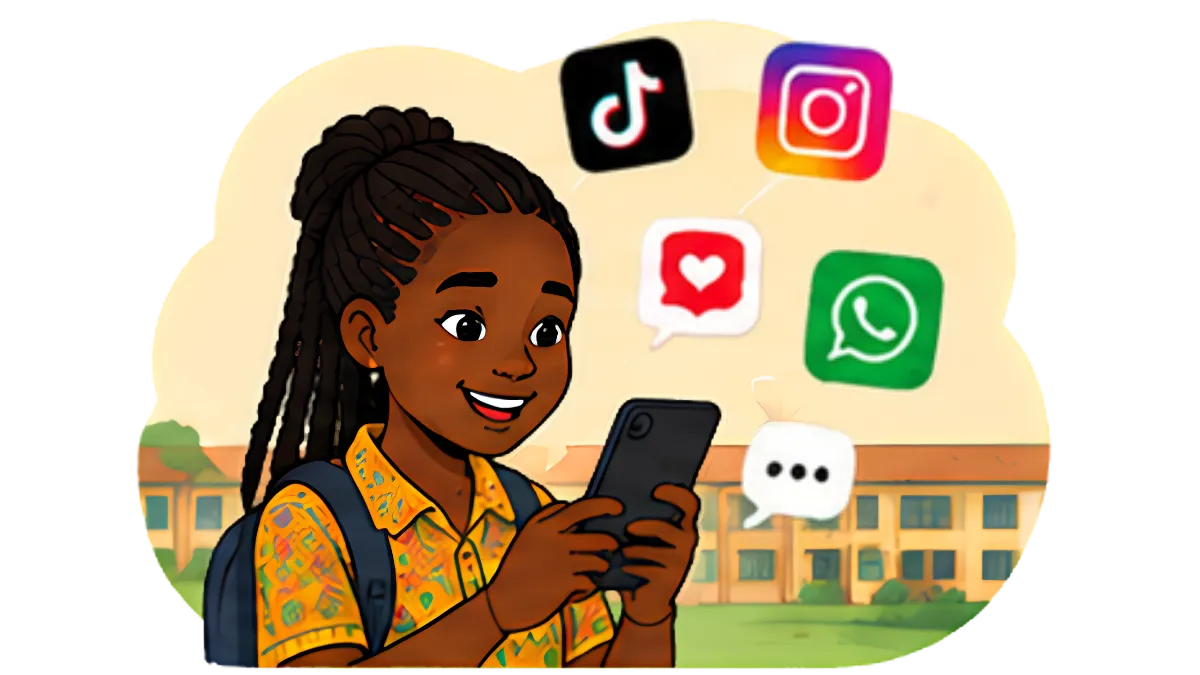
WhatsApp, TikTok, Instagram, Snapchat and Facebook help us connect, learn and create. A few simple habits help you enjoy them while protecting your privacy, your reputation and your wellbeing.

image 8904 (6)

WHY IT MATTERS

Most young Ghanaians are on social media every day. It’s where friendships, school groups, entertainment and even business happen. It’s also where people meet strangers, face bullying, see harmful content and share things they later regret. Anything posted online can be screenshotted and shared, even on “disappearing” apps.

Most platforms require users to be at least 13. Many younger children still have accounts, often on a parent’s phone, so guidance at home matters.
Tips

For young people

  • Set your accounts to private and only accept people you know in real life.
  • Think before you post: would you be happy for your family, teacher or a future employer to see it?
  • Never share your location, school, phone number or passwords publicly.
  • Be careful with new online friends. People are not always who they say they are.
  • If something upsets you, block, report and tell an adult you trust.

For parents & guardians

  • Ask your child to show you the apps they use and what they enjoy about them.
  • Help them set privacy settings together, rather than secretly checking their phone.
  • Agree simple family rules, such as no phones at mealtimes or in the bedroom at night.
  • Stay calm if they come to you with a problem, so they keep coming back.

For teachers

  • Talk about privacy, digital footprint and respect online as part of everyday lessons.
  • Agree clear rules for class and school WhatsApp groups.
  • Know your school’s process for reporting online bullying or abuse.

Need help?

  • Call the CyberClinic Helpline on 267, or report online.
  • If someone is in immediate danger, call the Police on 191 or emergency services on 112 straight away.