
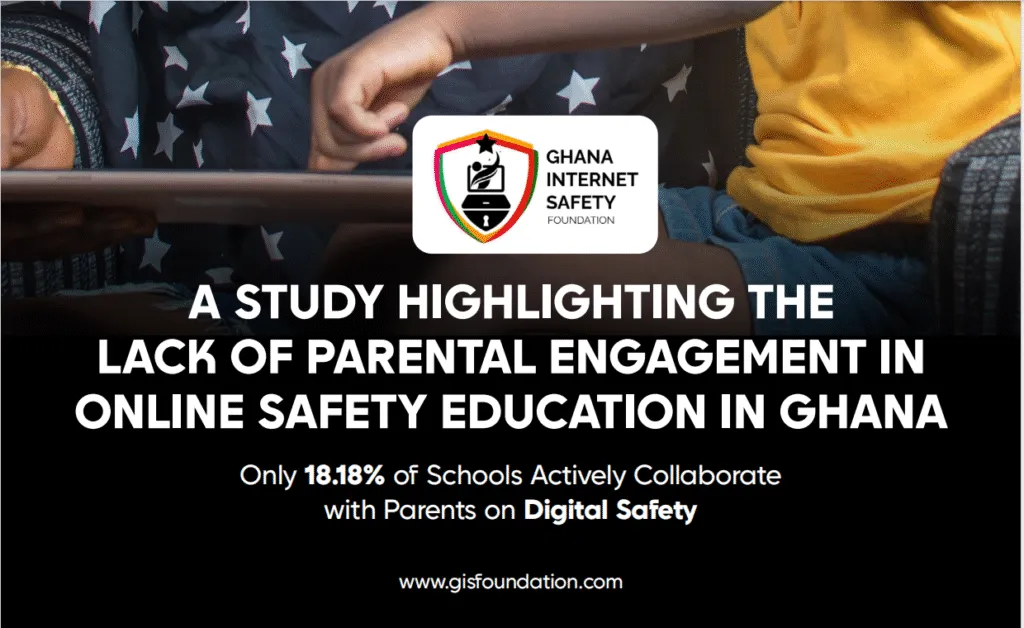
A new study by the Ghana Internet Safety Foundation (GISF) has revealed a critical gap in the shared responsibility to protect children online, with only 18.18% of schools in Ghana actively engaging parents in online safety initiatives. This lack of collaboration leaves students vulnerable to digital risks such as cyberbullying, grooming, and exposure to harmful content.
The findings, part of GISF’s Cybersafety Ambassadorial & Digital Parenting Empowerment Project, underscore the need for schools and parents to work together to create a unified approach to online safety. According to the study, while 46.45% of schools incorporate online safety into their curricula, these efforts are undermined by a lack of parental involvement, which is vital to reinforcing safe practices at home.
“Parents and schools must join forces to safeguard our children from the dangers lurking in the digital space,” said Emmanuel Adinkrah, CEO of the Ghana Internet Safety Foundation (GISF). “Online safety education cannot end in the classroom-it needs to extend into homes, and parents must be empowered to play an active role in protecting their children online. This is a shared responsibility, and it is critical that we address the gaps in collaboration between educators and families.”
The study also highlighted how socio-economic disparities further compound these challenges. Many parents in low-income communities lack access to digital tools or the knowledge needed to engage in meaningful online safety discussions with their children. These disparities often leave children from disadvantaged backgrounds more vulnerable to online threats.
“As a parent, I feel like I need more information to keep my children safe online,” said Mary Agyemang, a mother of three in Accra. “Sometimes, I don’t even know where to start when they have questions about things they see on the internet. I believe schools should involve us more and provide guidance so we can support our children better.”
Teachers also voiced concerns about the lack of collaboration with parents. “We do our best to teach students about online safety, but the reality is that we need parents to reinforce these lessons at home,” said Kwame Appiah, a teacher at a junior high school in Kumasi. “Without proper collaboration, it becomes harder to ensure the children are practicing safe habits when they’re online. Schools and families need to work as a team to keep students safe.”
Experts are calling for targeted interventions to bridge this gap, including community workshops, parent-focused training programs, and digital literacy initiatives tailored to different socio-economic contexts. “Empowering parents with the skills and resources to support their children online is critical to ensuring a safer digital enviro nment for all students,” added Adinkrah.