
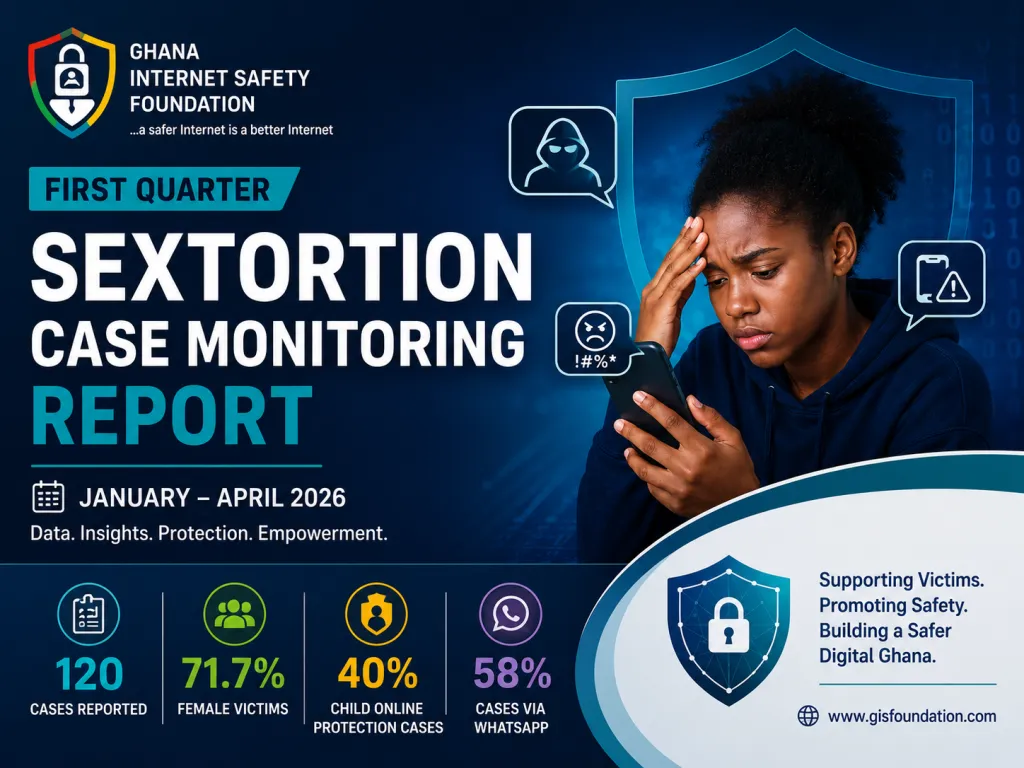
This report presents a consolidated analysis of sextortion-related cases reported between January and April 2026 through the Ghana Internet Safety Foundation’s reporting and support channels.
The report was developed to support awareness creation, policy engagement, victim support discussions, and broader national conversations on online safety and digital harm prevention in Ghana. It also contributes to ongoing efforts to better understand evolving sextortion patterns affecting internet users, particularly young people in Ghana who are highly active on social media and messaging platforms.
A total of 120 online harm and sextortion-related cases were recorded during the reporting period. January recorded 58 cases, representing 48.3% of all documented incidents, while April recorded 62 cases, representing 51.7% of the total reported cases during the reporting period.
Approximately 40% of all reported incidents involved Child Online Protection (COP)-related concerns, including sextortion attempts targeting minors, cyberbullying, online grooming indicators, non- consensual sharing of images involving minors, online harassment among students, and threats linked to intimate content.
Among the COP-related reports, the majority of affected victims fell within the Senior High School age bracket of approximately 15-18 years, while the remaining cases involved upper primary and junior high school-aged children between approximately 10-14 years. These findings reinforce growing concerns regarding the vulnerability of school-aged children and adolescents to online exploitation and abuse.
The cases reflected a broader range of online harms extending beyond traditional sextortion. Reported incidents included financial sextortion, cyberstalking, romance scam-related exploitation, account compromise, unauthorized sharing of intimate content, impersonation, online harassment, emotional coercion, blackmail, and privacy-related abuses.